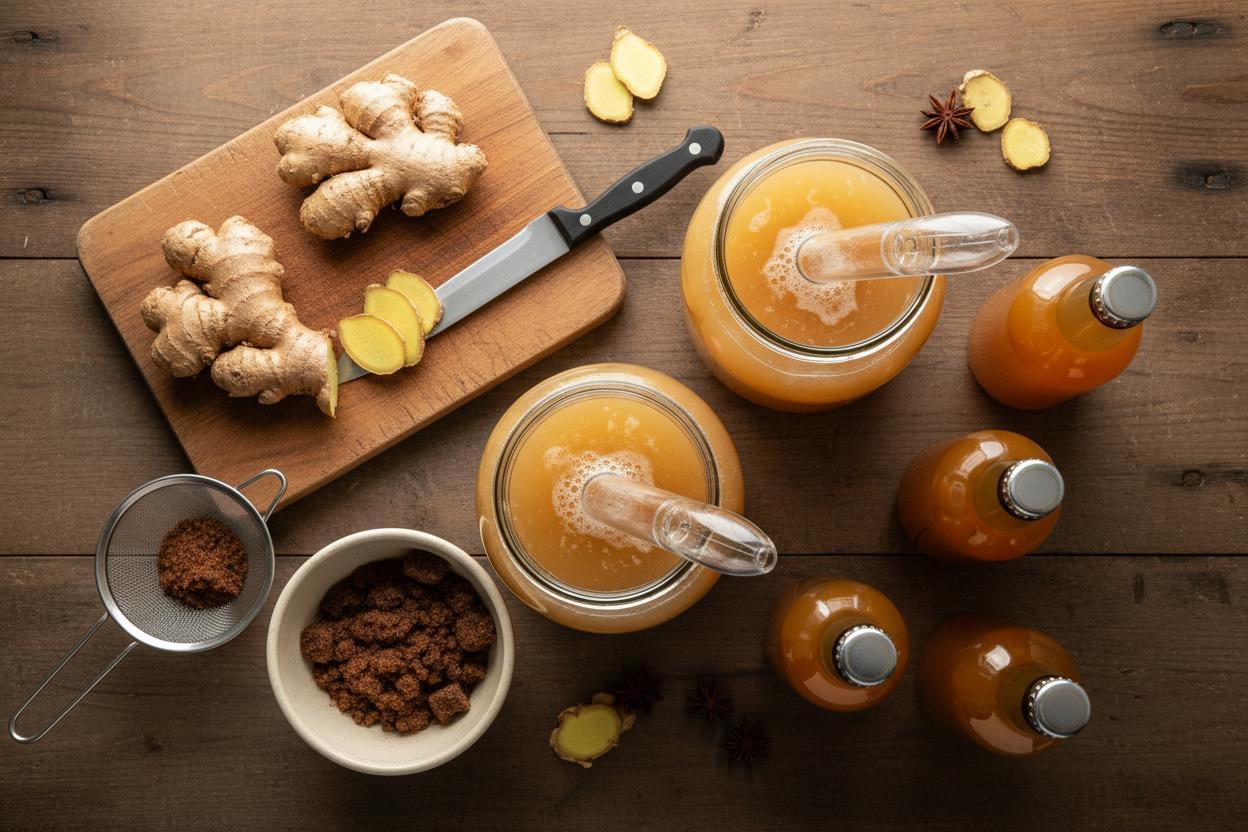
A Short, Spicy History of Ginger Beer
From 18th-century England to Thai street stalls, how fermented ginger spread around the world.
Ginger has been crossing borders for as long as people have been trading. Native to maritime Southeast Asia, it was one of the very first spices to travel the ancient routes westward, overland and by sea, through Indian and Arab merchants, into the Mediterranean world. The Romans prized it enough to tax it; by the Middle Ages it was one of the most common spices in Europe after black pepper, valuable enough that a pound of it could cost as much as a live sheep. The fizzy drink we love today is the product of centuries of that wandering.
From medicine to merriment
For most of its history, ginger was treated as medicine as much as flavour. Greek and Roman physicians prescribed it for the stomach; medieval European apothecaries used it for everything from plague to seasickness. That dual identity, delicious and good for you, is woven right into ginger's story, and it is part of why fermented ginger drinks felt so natural when they finally appeared.
Born in England
Fermented ginger beer became hugely popular in 18th-century England, brewed from ginger, sugar, water and a starter culture much like our ginger bug, often a curious symbiotic mass nicknamed the "ginger beer plant." Households and pubs kept their own brews bubbling along for years, topping them up like a sourdough. By the Victorian era, ginger beer was a genuine street-corner staple, sold from heavy salt-glazed stoneware bottles built to contain its natural pressure. It was, in every sense, the craft soda of its day.
A split in the family tree
Here is a distinction worth knowing, because the two are constantly confused. "Ginger beer" and "ginger ale" parted ways over time. Ginger beer stayed true to its roots: fermented, cloudy, assertive and spicy. Ginger ale emerged in the 19th century as something different, the famous pale, "dry" style was perfected in Canada, and became a clearer, sweeter, simply carbonated soft drink with little or no fermentation. Ours sits firmly, proudly on the ginger-beer side of the family: fermented, alive, and unafraid of real heat.
Spread across the world
As trade and empire expanded, ginger beer travelled. In the Caribbean it picked up local spices and became central to rum drinks like the Dark 'n' Stormy. Across Asia and Africa it met cultures where fresh ginger was already woven into daily cooking and traditional medicine, so a spicy fermented ginger drink needed no introduction. Everywhere it landed, it adapted to local tastes, which is exactly what we are doing here.
A natural fit for Thailand
Thailand has cooked with ginger and its aromatic cousins, galangal, turmeric, fingerroot, all members of the same plant family, for centuries. Ginger turns up in curries, soups, medicines and desserts across the country. So a bright, spicy, fermented ginger drink does not feel like a foreign import here; it feels like it has come home.
At GingerBros, we like to think of our fizz as the latest chapter in a very long, very delicious story, one that started on a Southeast-Asian hillside and, after a few thousand years of travel, came right back.
References & further reading
- 1.Ginger: the plant, its southeast-Asian origin, and its spread to the Mediterranean and EnglandEncyclopædia Britannica
- 2.Herbs in History: Ginger, origins, ancient trade routes, and culinary/medicinal useAmerican Herbal Products Association (2023)
Sources are provided for general education. This article is not medical advice; consult a healthcare professional for personal guidance.
Taste the difference
Real ginger, natural fermentation, live cultures. Get a bottle of GingerBros and try it for yourself.
More from Culture
 Culture
Thai Ginger vs the World: Why Origin Matters
Not all ginger is created equal. Here is what makes the Thai rhizome special.
Read articleCultureMeet the Brewers Behind the Bottle
The small Bangkok team that hand-balances every batch, and why they do it by taste, not by formula.
Read article